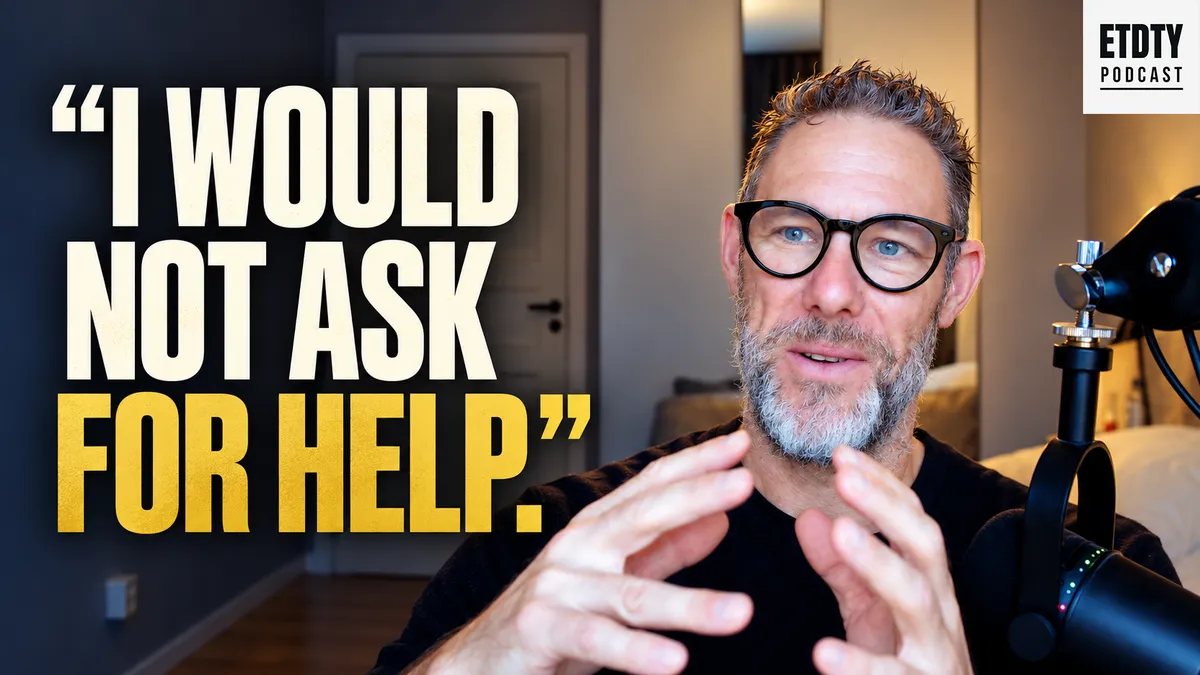
Executive Loneliness: Nick Jonsson's Leadership Journey
Executive Loneliness, Mental Health, Leadership Vulnerability
Executive Loneliness: How Nick Jonsson Turned Success, Addiction, and Vulnerability into Leadership Strength
Executive titles, corner offices, and impressive resumes often hide a quieter reality: profound isolation. Few stories illustrate this more clearly than that of Nick Jonsson, a successful executive whose journey through addiction, collapse, and recovery has reshaped how many leaders think about mental health, vulnerability, and what it really means to succeed at the top.
From Outward Success to Inner Isolation
For years, Nick Jonsson’s life looked like a case study in achievement. He climbed the corporate ladder across several countries, held senior regional roles, and built a strong professional network. On paper, he embodied the high-performance executive: driven, articulate, and relentlessly focused on results. Yet behind this polished exterior, a different story was unfolding—one defined by Executive Loneliness, chronic self-pressure, and the quiet erosion of his mental health.
Like many senior leaders, Jonsson had internalized an unwritten rule: executives must appear in control at all times. Admitting doubt, fear, or exhaustion felt incompatible with the image of a decisive, resilient leader. This belief, shared across many boardrooms, creates a powerful form of Isolation In Executives—a separation not only from others, but from their own emotional reality. The higher he rose, the fewer people he felt he could really talk to, and the more he relied on performance to mask pain.
The Descent: Addiction as a Coping Mechanism
In this environment of pressure and silence, Jonsson turned increasingly to alcohol as a way to cope. What began as social drinking gradually evolved into dependence. Late-night flights, client dinners, and celebratory events provided convenient cover. To colleagues, he was still the committed executive who never switched off. Internally, he was using alcohol to numb anxiety, self-doubt, and the gnawing emptiness that came with constant performance and little authentic connection.
This is a familiar pattern in Addiction Recovery narratives among senior professionals. Addiction rarely appears overnight. It creeps in as a seemingly manageable habit, rationalized as “stress relief” or “part of the job.” For Jonsson, the combination of travel, client expectations, and internalized perfectionism created a fertile ground for dependency. The more he leaned on alcohol, the more his sense of self-worth became entangled with his ability to keep functioning at a high level despite it. The executive mask stayed on; the private struggle intensified.
Hitting Bottom: When Success No Longer Protects You
Eventually, the fragile balance collapsed. Jonsson’s performance, health, and relationships began to deteriorate. He experienced a series of personal and professional crises that stripped away the illusion that he could manage everything alone. The very strengths that had propelled his career—self-reliance, high standards, and a strong public image—had become barriers to seeking help. Admitting the truth meant confronting not only addiction, but years of unaddressed Mental Health challenges and unspoken fears about failure and identity.
This moment of collapse was more than a personal low point; it was a turning point in his understanding of leadership. Jonsson recognized that his silence had been deadly. The culture of invulnerability in senior roles had encouraged him to hide, to self-medicate, and to believe that asking for help would destroy his credibility. Instead, it nearly destroyed his life. Accepting the depth of his addiction was the first step toward genuine Leadership Vulnerability—a form of courage he had never been taught to value in the boardroom.
The Turning Point: Choosing Recovery and Connection
Jonsson’s path into Addiction Recovery began when he finally acknowledged that he could not manage alone. He sought professional help, engaged with recovery communities, and allowed himself to be honest about his struggles—first in private, then more publicly. What stands out in his story is not just the decision to stop drinking, but the decision to break the pattern of isolation that had fueled his addiction in the first place.
Recovery required more than abstinence; it demanded a redefinition of what it meant to be an executive. Jonsson began to see that openness, humility, and the ability to say “I am not okay” were not weaknesses, but essential leadership capabilities. He learned to replace secrecy with support, and performance-driven identity with a more grounded sense of self. This shift marked the beginning of profound Personal Growth—growth that would ultimately shape his mission and message to other leaders.
From Vulnerability to Advocacy: Speaking About Executive Loneliness
As he stabilized in recovery, Jonsson made a deliberate choice: he would not return to the old pattern of silent suffering. Instead, he began speaking openly about Executive Loneliness, addiction, and mental health in leadership. He shared his story on stages, in interviews, and through his writing, including his book on the topic. By putting language around his experiences, he gave other executives permission to recognize themselves in his journey and to question the myths that kept them silent.
In doing so, he transformed his vulnerability into a form of service. His story resonates because it is specific—rooted in the realities of senior leadership—and because it directly challenges the assumption that success immunizes executives from mental health challenges. Jonsson’s advocacy underscores a simple but often ignored truth: isolation at the top is not a personal failing, but a structural and cultural issue that organizations must address intentionally.
Why Mental Health in Leadership Cannot Be Optional
The importance of Mental Health in leadership goes far beyond individual well-being. Executives shape culture, set expectations, and influence whether others feel safe to speak up. When leaders operate from a place of unaddressed stress, burnout, or addiction, the consequences ripple through teams and organizations. Decision quality declines, empathy erodes, and trust is undermined. In contrast, leaders who prioritize their own mental health are better equipped to make balanced decisions, create psychologically safe environments, and sustain performance over time.
Jonsson’s journey highlights several critical lessons for organizations:
Silence is costly. Ignoring Isolation In Executives can lead to burnout, ethical lapses, or crises that are far more damaging than early, honest conversations.
Support must be proactive. Confidential coaching, peer forums, and access to mental health resources should be built into executive development, not offered only after a crisis.
Culture starts at the top. When leaders model Leadership Vulnerability, they normalize conversations about stress, mistakes, and help-seeking throughout the organization.
Redefining Strength: Vulnerability as a Leadership Competency
One of the most powerful aspects of Nick Jonsson’s story is how clearly it challenges outdated ideas of executive strength. For years, strength was equated with stoicism and self-sufficiency. Yet his experience shows that this definition can be dangerous. True resilience is not the absence of struggle; it is the capacity to acknowledge struggle, seek support, and adapt. In this sense, Leadership Vulnerability is not a soft skill, but a strategic one—directly connected to sustainable performance and ethical decision-making.
By speaking openly about addiction and recovery, Jonsson demonstrates that leaders do not lose authority when they share their humanity. Instead, they gain credibility and trust. Teams are more likely to follow leaders who are honest about their limitations and who take responsibility for their own Personal Growth. This shift in mindset—away from perfection and toward authenticity—is essential if organizations are serious about addressing executive loneliness and building healthier cultures.
Practical Steps for Executives and Organizations
Jonsson’s journey offers a roadmap, not just a cautionary tale. Executives and organizations can take concrete steps to reduce isolation and support mental health at the top:
Create confidential peer forums. Structured groups where senior leaders can speak openly, without fear of judgment or political consequences, can significantly reduce Executive Loneliness.
Normalize professional support. Encourage executives to work with therapists, coaches, or counselors, framing this as a sign of responsibility, not weakness.
Set boundaries and model balance. Leaders who protect their own recovery, rest, and reflection time send a clear signal that mental health is a strategic priority.
Share stories responsibly. When appropriate, leaders can share elements of their own struggles, as Jonsson has, to reduce stigma and open the door for others to seek help.
A New Definition of Success at the Top
The story of Nick Jonsson is ultimately a story of redefinition. It traces a path from external success and internal collapse to a more integrated form of leadership—one that honors both performance and well-being. His experiences with addiction, the painful recognition of isolation, and his ongoing recovery underscore a critical message for today’s professionals: success without psychological safety is fragile, and no title is worth your health or your life.
For executives, embracing vulnerability is not about oversharing or abandoning professionalism. It is about acknowledging reality, building support, and rejecting the myth that you must carry everything alone. For organizations, it is about recognizing that Mental Health, Leadership Vulnerability, and Personal Growth are not peripheral topics—they are central to sustainable performance and ethical leadership. When leaders at the top feel seen, supported, and safe to be human, the entire culture benefits.
In a world that still rewards appearances of invincibility, Nick Jonsson’s journey stands as a powerful reminder: courage is not the absence of struggle, but the decision to face it openly. Addressing Executive Loneliness is not only an act of self-preservation; it is an act of leadership.